


Rental Contract Management Software: Track Terms, Payments, and Renewals
Learn how to manage rental contracts, track expiration dates, payment schedules, accounts receivable, and renewals to minimize operational errors.

What is Rental Contract Management Software?
Rental contract management software is a tool that helps businesses store contracts, track terms, manage payment schedules, control accounts receivable, and handle renewals or liquidations in a centralized system. Depending on its features, the software can link each contract to tenants, assets, addendums, payment schedules, and assigned personnel.
This solution is suitable for managers of rental properties, offices, commercial spaces, warehouses, or any asset portfolio with multiple contracts to monitor. Instead of relying on personal calendars or separate Excel files, managers can check contract statuses and pending tasks through a unified workflow.
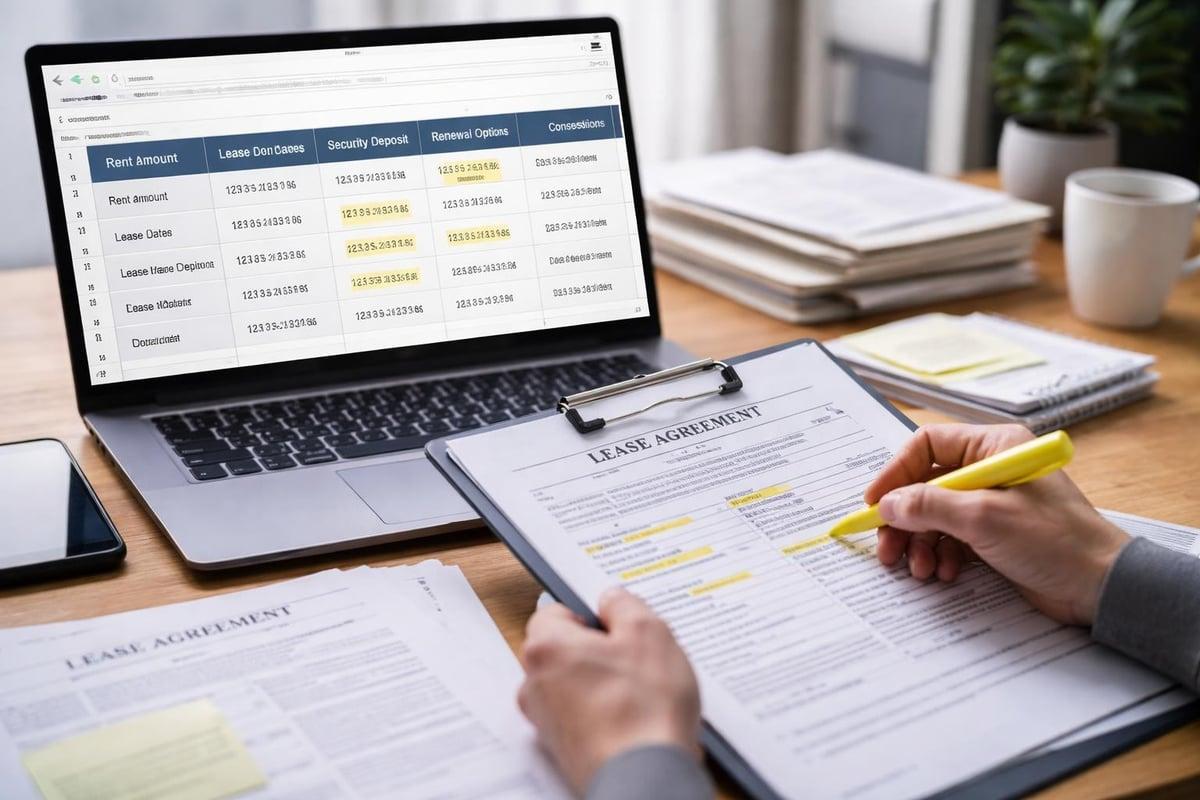
For example, a commercial lease contract may include monthly rent, security deposit, payment dates, lease duration, and renewal terms. If this information is stored separately, businesses must manually cross-reference data when rent is due or when contracts near expiration. Software centralizes this data and sets automated reminders, though managers must still verify terms and confirm actual transactions.
 Why is Managing Rental Contracts with Excel Prone to Errors?
Excel can meet needs when the number of contracts is small and terms are simple. However, as businesses manage numerous properties, tenants, and varied payment schedules, manual data maintenance becomes difficult to control.
Common issues include:
- Missing expiration dates: end dates are in files, but there is no clear reminder process.
- Forgetting collection schedules: varying payment cycles force staff to check multiple spreadsheets.
- Difficult debt reconciliation: hard to track paid amounts, remaining balances, or pending payments.
- Confusing contract versions: new addendums stored elsewhere lead staff to use outdated terms.
- Lack of change history: difficult to track who updated terms, amounts, or payment conditions.
- Reliance on individuals: when personnel resign or hand over, information becomes fragmented and work is disrupted.
It is worth noting that the problem lies not in Excel itself, but in the lack of unified updating, reminding, reconciling, and handover processes. As contract volume or complexity grows, businesses should evaluate whether current tools remain adequate.
Key Features Needed in Rental Contract Management Software
1. Centralized Contract and Addendum Storage
Each contract should have an individual profile containing parties' information, rented assets, term duration, rental price, security deposit, payment terms, and attached documents.
Addendums should link to the original contract so managers can easily identify active terms. When changes occur, version history should be maintained rather than overwriting existing records without a trace.
This organization reduces document search time and prevents the use of outdated versions during operations.
2. Term Tracking and Renewal Reminders
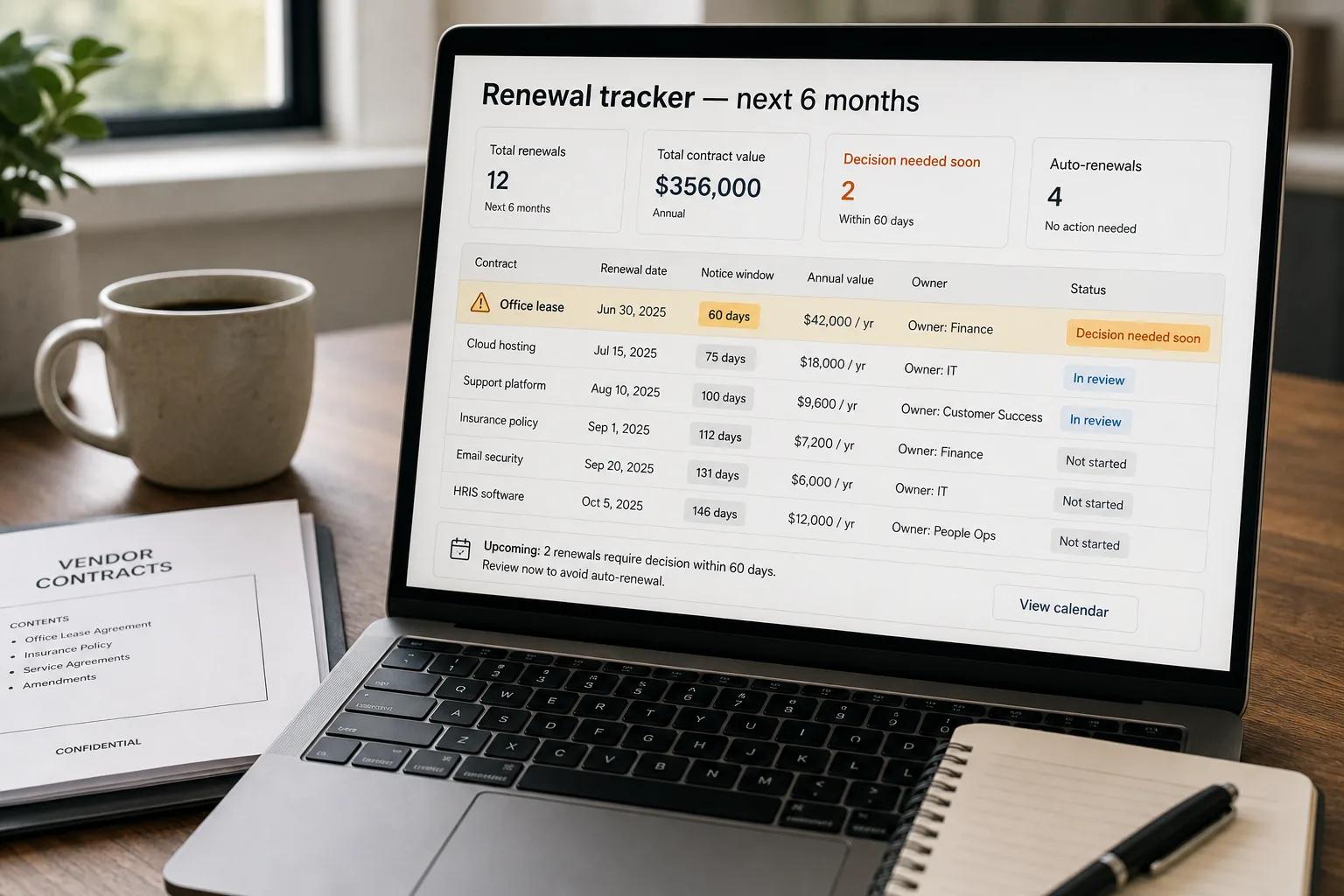
Software should allow setting start dates, end dates, and advance reminder windows. Upon reaching configured milestones, the system can send notifications or generate tasks for assigned personnel.
An effective tracking process goes beyond sending notifications. Managers need visibility into expiring contracts, assigned handlers, tenant responses, and next steps—whether renewal, liquidation, or pending decisions.
Businesses should distinguish three statuses: expiring soon, expired, and pending procedure completion. Clear categorization helps prioritize tasks and reduces oversight risks.
3. Managing Payment Cycles and Receivables by Contract
For lease contracts, duration and payment obligations must be tracked side-by-side. The software can help generate collection schedules based on terms, record individual payments, and display remaining balances due.
For instance: rent for a space is due on the 5th of each month. If the tenant makes a partial payment on the 5th and the rest on the 12th, the record should clearly show the recorded amount, remaining balance, and reconciliation status. Staff should not mark contracts as "paid" when only partial payment is received.
When implementing, businesses must standardize how partial payments, security deposits, adjustments, and other receivables are recorded. Software accurately reflects debts only when terms, transaction data, and entry rules are properly configured.
4. Managing Renewals, Amendments, and Liquidations
During the lease term, contracts may undergo changes in duration, rental rates, area, or other conditions. Software should help businesses record amendments, link addendums to original contracts, and retain history for auditing.
Upon early liquidation or scheduled termination, managers must verify outstanding obligations, pending payments, security deposits, and handover records per agreement.
Simply setting status to "liquidated" is insufficient. Businesses need an operational checklist to ensure all related steps have been handled according to contracts and internal policies.
5. Access Control and Approval Workflows
Not every employee requires access to view or edit all contracts. Software should support role-based, department-based, or document-sensitivity access controls.
For contracts requiring pre-execution approval, businesses should evaluate capabilities to set up approval flows, track statuses, and record audit logs. This is especially useful when sales, legal, finance, and asset management teams collaborate on contracts.
Proper authorization limits unnecessary access, but must be accompanied by systematic processes for granting, revoking, and periodically auditing permissions.
Efficient Rental Contract Management Process
Businesses can establish a six-step workflow to minimize overlooked contracts or un-reconciled receivables.
Step | Tasks | Expected Results |
1. Create Profile | Input contract, tenant, asset, and related document details. | Complete profile, easy to look up. |
2. Verify Terms | Verify terms, rates, deposits, and payment schedules. | Data matches signed contract. |
3. Configure Reminders | Set advance reminders and payment schedule tasks. | Clear ownership and schedule. |
4. Track Execution | Record payments, debt, and changes. | Up-to-date actual status. |
5. Pre-expiration Action | Review renewals, amendments, or liquidations. | Prevent delayed decisions due to missing info. |
6. Close File | Reconcile obligations, complete steps, and archive. | Historical records stored for future reference. |
This process should be tailored based on asset type and contract terms. Long-term office leases may require more approval steps than short-term equipment rentals; therefore, businesses should design suitable workflows rather than enforcing a one-size-fits-all template.
 When Should Businesses Transition from Excel to Contract Management Software?
Businesses should consider software when manual tracking begins to impair control over deadlines, receivables, or documentation.
Common signs include:
- Growing number of contracts with varying expiration dates.
- Each contract has unique payment terms, renewal periods, or adjustment clauses.
- Multiple employees update records without standardized guidelines.
- Difficulty aggregating receivables, collected amounts, and outstanding debt per contract.
- Addendums and contracts are scattered across different folders.
- Staff handovers frequently cause work disruptions.
- Need to restrict viewing rights and track edit histories.
There is no fixed contract threshold for every company. A firm managing dozens of highly complex contracts might still require specialized management software; conversely, a small, simple portfolio can continue using spreadsheets if control processes remain effective.
Prior to transitioning, businesses should standardize existing data, unify contract coding conventions, verify terms and figures, and test sample data before full operational launch.
How to Choose the Right Contract Management Software
When evaluating solutions, businesses should look beyond user interface or feature counts. Ensure the software effectively handles scenarios occurring in actual workflows.
 You can use the following checklist:
- Store contracts, addendums, and attached documents per profile.
- Track start dates, end dates, and reminder milestones.
- Set up payment schedules based on contract terms.
- Record partial payments and reconcile debts.
- Manage renewals, amendments, and liquidations while retaining history.
- Support permissions and approval workflows.
- Search records by tenant, asset, status, or term.
- Export data and hand over files as needed.
- Provide implementation guides, data onboarding, and support.
During software demos, request an end-to-end scenario demonstration: creating a contract, setting up payment schedules, logging a payment, updating an addendum, and processing an expiring contract. This evaluates actual operational fit better than reviewing feature lists alone.
How OneXEOS Rental Contract Management Software Helps
The OneXEOS Rental & Contract solution supports centralizing contract records, tracking terms and payment schedules, reminding renewals, handling extensions or liquidations, along with approval flows and permissions management.
The system automatically generates collection schedules from contract terms, monitors each period, and records partial payments. Managers can also configure lead times prior to expiration so the system creates tracking tasks.
When selecting a solution, evaluate its compatibility with your specific contract types, payment cycle configurations, exception handling workflows, and document access rights. These factors determine real-world operational suitability.
Beyond contract management, businesses can explore the OneXEOS Accounting application to connect operational data with accounting workflows. For tenant communication history and contact tracking, the OneXEOS CRM application serves as an additional module. Specific integration scope should be confirmed according to deployment needs.
Frequently Asked Questions About Rental Contract Management Software
1. Can contract management software remind before expiration dates?
Yes, if task reminders are supported and lead times configured. Businesses should check notification channels, whether tasks are generated for assigned handlers, and how pending cases are tracked.
2. Can payment schedules and accounts receivable be managed under the same contract?
Certain software supports generating schedules based on terms, logging receipts, and tracking remaining balances. Verify capabilities for partial payments, schedule adjustments, and incidental charges based on operational reality.
3. When a contract has a new addendum, is a new file needed?
It depends on workflows and software architecture. Proper management ensures addendums link to original contracts, changes are auditable, and version history is preserved without replacing old files blindly.
4. Does contract management software replace legal review?
No. Software assists with storage, tracking, and process organization, but does not replace reading, verifying, and evaluating contract terms. For legally sensitive matters, qualified experts must review agreements prior to signing, amending, or terminating.
5. Do small businesses need contract management software?
This depends on contract volume, complexity, and risks associated with missing deadlines or payments. If current spreadsheets remain easily controllable, businesses can continue using them. When tracking becomes fragmented or heavily reliant on individuals, dedicated solutions should be evaluated.
Conclusion
Managing rental contracts involves much more than storing signed copies. Businesses must monitor expirations, payment schedules, accounts receivable, addendums, and necessary tasks before renewals or liquidations.
A clear process combined with suitable software centralizes information, reduces reliance on manual memory, and helps managers prioritize tasks. Before implementation, address current pain points, standardize data, and test with real scenarios.
Experience the free OneXEOS Rental & Contract solution to digitize your process and gain 100% control over your lease contracts today!
________________________________________
ONEXEOS - Enterprise Operating System
 Website: www.onexeos.com
 Hotline: 0986 935 251
 Email: hello@onexeos.com
 Address: M4-21, M4 Street, Manhattan Villa Area, Vinhomes Grand Park, Long Binh Ward, HCMC

