


Raw Material Management Software for Fried Chicken Store Chains
Learn how to choose raw material management software for fried chicken chains, controlling inventory, expiration dates, portioning, and loss across branches.
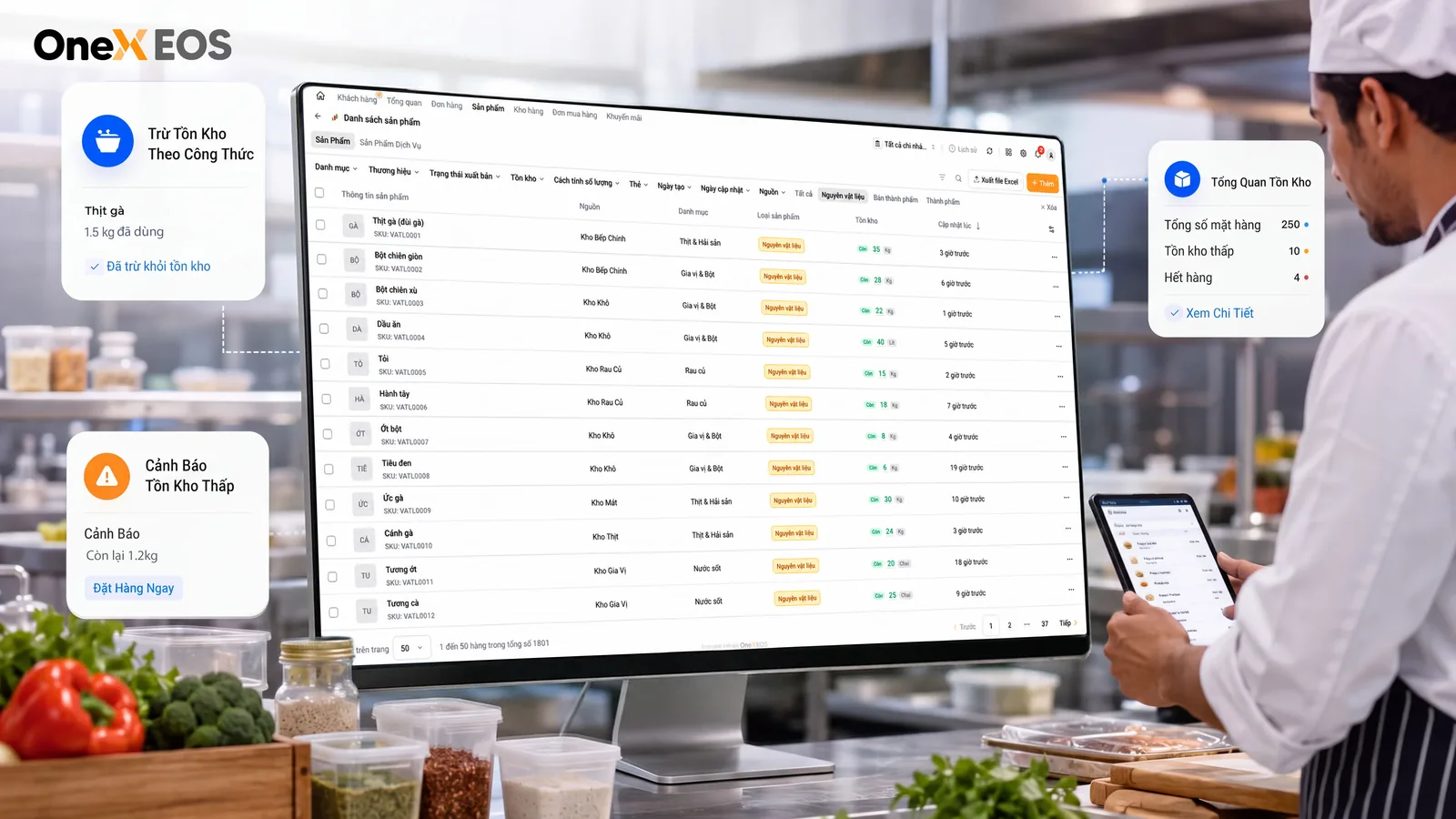
Raw Material Management Software for Fried Chicken Store Chains: How to Control Inventory and Reduce Loss
Why Do Fried Chicken Store Chains Need Raw Material Management Software?
For a single fried chicken store, checking quantities of chicken, frying flour, cooking oil, and packaging can be done using logbooks or spreadsheets. However, when expanding into a multi-branch chain, manual management quickly reveals its limitations: slow data updates, difficulty in reconciling between stores, and trouble pinpointing the causes of unusual raw material loss.
The nature of the fried chicken model is that raw materials are not just tracked by import and export quantities. Many items need to be monitored by shelf life, storage conditions, and recipe portioning. For example, a fried chicken combo can use several different ingredients, from chicken pieces and frying flour to potatoes, sauces, and packaging.
Without synchronized control, store chains may face issues such as:
- Inaccurate Inventory: System figures differ from the actual raw material quantities at the store.
- Stock Shortage or Surplus: A branch runs out of chicken during peak hours but holds excessive stock during low-demand periods.
- Difficulty Controlling Expiration Dates: Ingredients near expiration are not detected in time, increasing the risk of waste.
- Inconsistent Portioning: The amount of ingredient used for the same dish varies across staff or branches.
- Hard to Trace Loss: Managers spend considerable time cross-checking imported goods, sales volume, and actual remaining stock.
This is why chain management software should be viewed as an operational control tool, rather than merely a record-keeping ledger for inventory inbound and outbound.
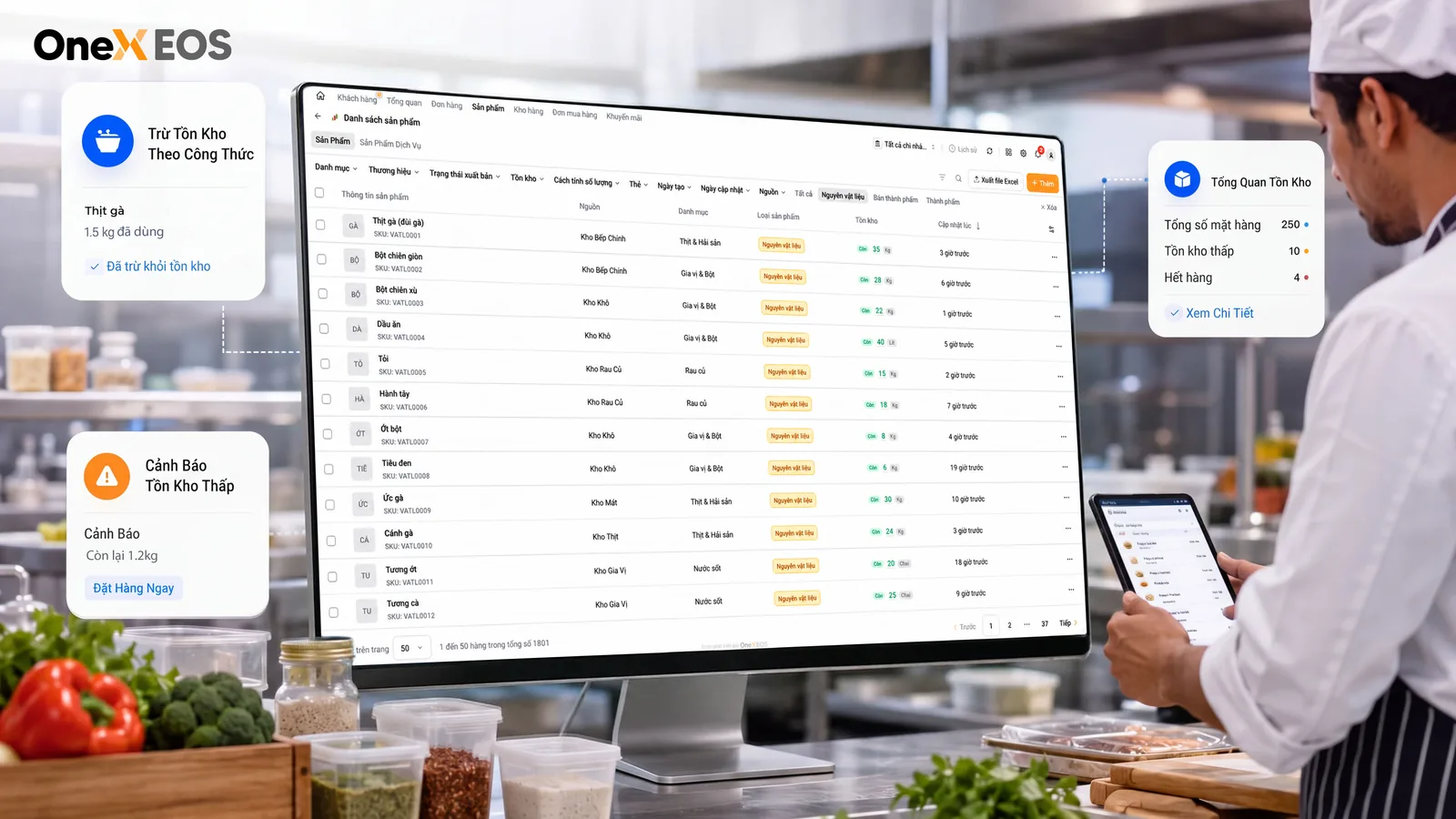 What Features Should Raw Material Management Software for Fried Chicken Chains Have?
Not every inventory management software meets the full requirements of a fast food chain. When selecting a solution, businesses should prioritize features directly tied to procurement, storage, preparation, and sales processes.
1. Centralized Inventory Management by Branch
Store chains need to track raw material quantities at the central warehouse and each sales outlet on a single system.
For example, the operations team needs to know how many kilograms of chicken remain at Branch A, how many liters of cooking oil at Branch B, and which packaging type Branch C is lacking. When data is synchronized, managers can proactively allocate stock instead of waiting for end-of-day staff reports.
A suitable inventory management system should support:
- Tracking inventory across individual stores and central warehouses.
- Recording goods receipts, issues, usage, and stock adjustments.
- Consolidating figures across branches.
- Reviewing inventory transaction history to investigate discrepancies.
2. Expiration Date and Batch Tracking
Fresh chicken, frozen chicken, sauces, and pre-processed ingredients have different shelf-life management requirements. If only total inventory quantities are tracked, staff may not know which batch should be prioritized for use first.
The software should allow logging information by batch, receipt date, and expiration date to assist in raw material control during storage.
Standardized procedures should include:
- Logging receipt dates and expiration dates for each batch.
- Monitoring ingredients by warehouse or branch.
- Alerting near-expiry items when supported by the system.
- Supporting FEFO (First Expired, First Out) principles—prioritizing batches closest to expiration when aligned with storage and food safety guidelines.
Note that while software tracks data and provides alerts, it does not replace temperature monitoring, storage conditions checks, or food safety protocols at the store level.
3. Portioning Management by Dish and Combo
One key factor directly affecting the cost of goods sold (COGS) in a fried chicken store is the ingredient quantity used for each menu item.
For instance, a combo may include fried chicken, French fries, a drink, and sauce. If staff exceed standard portions, actual costs will rise even though selling prices remain fixed.
Therefore, store chains should standardize recipes or ingredient norms for every dish, meal, and combo. Recipe norm data can be used to compare expected ingredient usage against actual warehouse dispatch.
This gives managers a basis to detect variance requiring investigation, such as:
- A store using significantly more ingredients than expected.
- An abnormal increase in the cost price of a combo.
- Inconsistent portioning standards applied across branches.
- Dispatched ingredient quantities not corresponding to sold dish counts.
However, verify whether software supports recipe portioning setup and auto-deduction upon sale prior to deployment. Do not assume all inventory systems feature these capabilities.
4. Stock Transfers Between Central Warehouse and Stores
In fried chicken chains, central warehouses receive goods from suppliers and distribute them to sales points. Additionally, inter-branch transfers arise when one store experiences shortages while another holds surplus stock.
The software must support logging transfer steps thoroughly, from stock issue to store receipt.
Recorded information should include:
- Dispatching warehouse or store.
- Receiving warehouse or store.
- Ingredient list and transfer quantities.
- Timestamp and responsible personnel.
- Actual received quantities and any discrepancies.
Document-based tracking helps businesses identify item locations, accountability, and the exact stage where variances occurred.
5. Reconciling Inventory with Sales Data
If sales and inventory data are managed separately, staff must consolidate figures from multiple sources before determining raw material usage.
A system linking sales with inventory allows businesses to cross-check sold dish quantities against recipe norms, helping managers spot cases requiring further inspection.
For example, if a store sells 200 chicken portions in a day but dispatched chicken stock is significantly higher than expected norms, management can review preparation waste, spillage, sampling, auditing errors, or entry mistakes.
It is essential to distinguish between actual waste, spoiled goods, and data errors. Software provides reconciliation data; identifying root causes still relies on operational procedures and documentation.
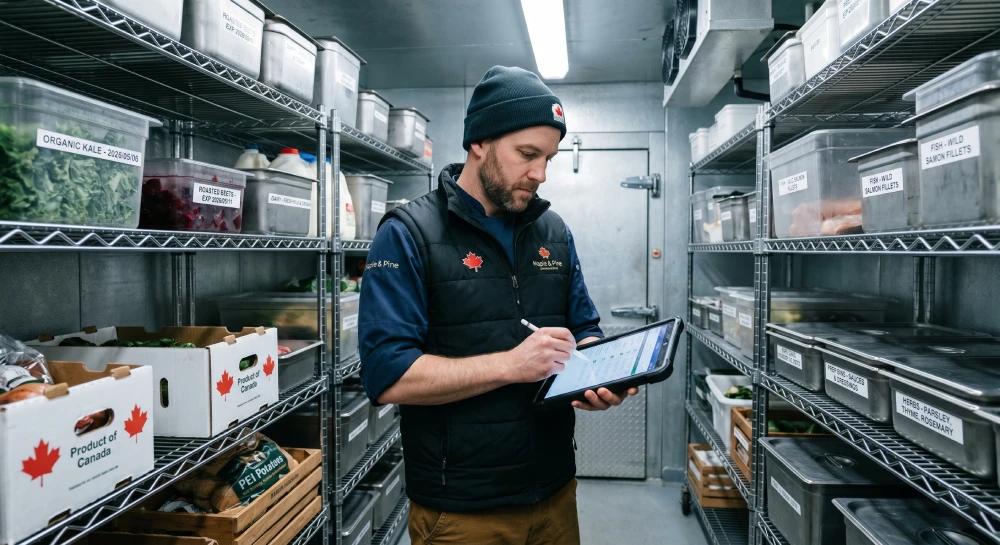 How to Manage Fried Chicken Chain Ingredients Using Software
To maximize software efficiency, businesses should establish unified processes across the chain rather than merely migrating paper records to a digital system.
Step 1: Standardize the Raw Material Catalog
Create a shared ingredient catalog for all stores, including item names, units of measure, item codes, packaging specifications, and unit conversion rules.
For instance, chicken may be purchased in crates but utilized in kilograms or pieces. Without clear conversion rules, inventory figures between purchasing, warehouse, and retail outlets will easily mismatch.
Step 2: Set Inventory Par Levels
Determine minimum and maximum inventory levels for each ingredient based on sales velocity, lead times, storage capacity, and preservation characteristics.
For short shelf-life items, avoid excessively high par levels just to prevent stockouts. The objective is balancing service capacity against waste risks.
Step 3: Standardize Receipt - Issue - Transfer Workflows
All transactions must be logged promptly with assigned accountability. Upon receiving goods, staff should check quantity, ingredient condition, and batch details according to company policy.
Damaged goods, expired items, vendor returns, or internal usage should be recorded separately to avoid distorting sales consumption figures.
Step 4: Integrate Sales Data with Inventory
If software supports menu portioning rules, configure ingredient deduction logic corresponding to each menu item.
As sales volumes grow, managers can compare projected ingredient demand against current stock levels to prepare stock for upcoming shifts.
Step 5: Perform Audits and Analyze Variances Regularly
Avoid conducting inventory counts only at month-end. High-value, fast-moving, or perishable items should be audited at appropriate higher frequencies.
Audit reports must show system stock, physical stock, and variance. Managers can then verify causes and execute authorized adjustments.
Criteria for Selecting Raw Material Management Software for Fried Chicken Chains
When evaluating solutions, businesses should compare choices based on actual operational needs rather than advertised feature lists alone.
Criteria | Checklist Items |
Multi-branch Management | Does it track stock per store and central warehouse on a single system? |
Batch & Expiry Tracking | Does it record batch information, shelf life, and provide suitable alerts? |
Portioning & Norm Control | Can you define recipe norms by dish or combo? |
Inter-store Transfers | Does it log dispatch, receipt, and transfer history across locations? |
Sales Integration | Does it reconcile sales volume with ingredient consumption? |
Reporting Capabilities | Are inbound-outbound-stock, audit variance, and COGS reports adequate? |
User Permissions | Does it support role permissions for chain managers, store managers, warehouse staff, and accountants? |
Scalability | Can new branches be added without rebuilding item master catalogs and workflows? |
Total Cost | Does total cost include deployment, training, integration, and post-sale support? |
Before signing a contract, request vendor demonstrations of end-to-end workflows: receiving frozen chicken, allocating to two stores, logging combo sales, handling waste, and shift-end counts. This tests practical fit beyond basic inventory functionality.
How OneXEOS Supports Raw Material Management for Fried Chicken Chains
For fried chicken chains, raw material management must fit within sales operations and multi-store workflows. Disconnected inventory, order, and report systems force staff into manual data consolidation to find discrepancy causes.
OneXEOS offers F&B sector solutions and inventory management aimed at unifying operational data on one system.
Key functional areas include:
- Multi-branch Inventory Control: Tracks stock levels across warehouses and active store locations.
- Batch & Expiry Management: Logs batch details to prioritize items needing urgent use.
- Internal Stock Transfers: Records movement between warehouses to maintain clear audit trails.
- Sales Data Connection: Connects revenue, order counts, and stock data for cross-checking.
- Centralized F&B Chain Oversight: Helps management supervise multiple branches, assign user roles, and aggregate reporting.
Businesses can explore all OneXEOS industry-specific solutions to evaluate appropriate configurations for their scale.
For specialized fried chicken workflows—such as auto-deduction by portion norms, recipe management, or combo COGS calculations—confirm feature scope directly with consultants before choosing.
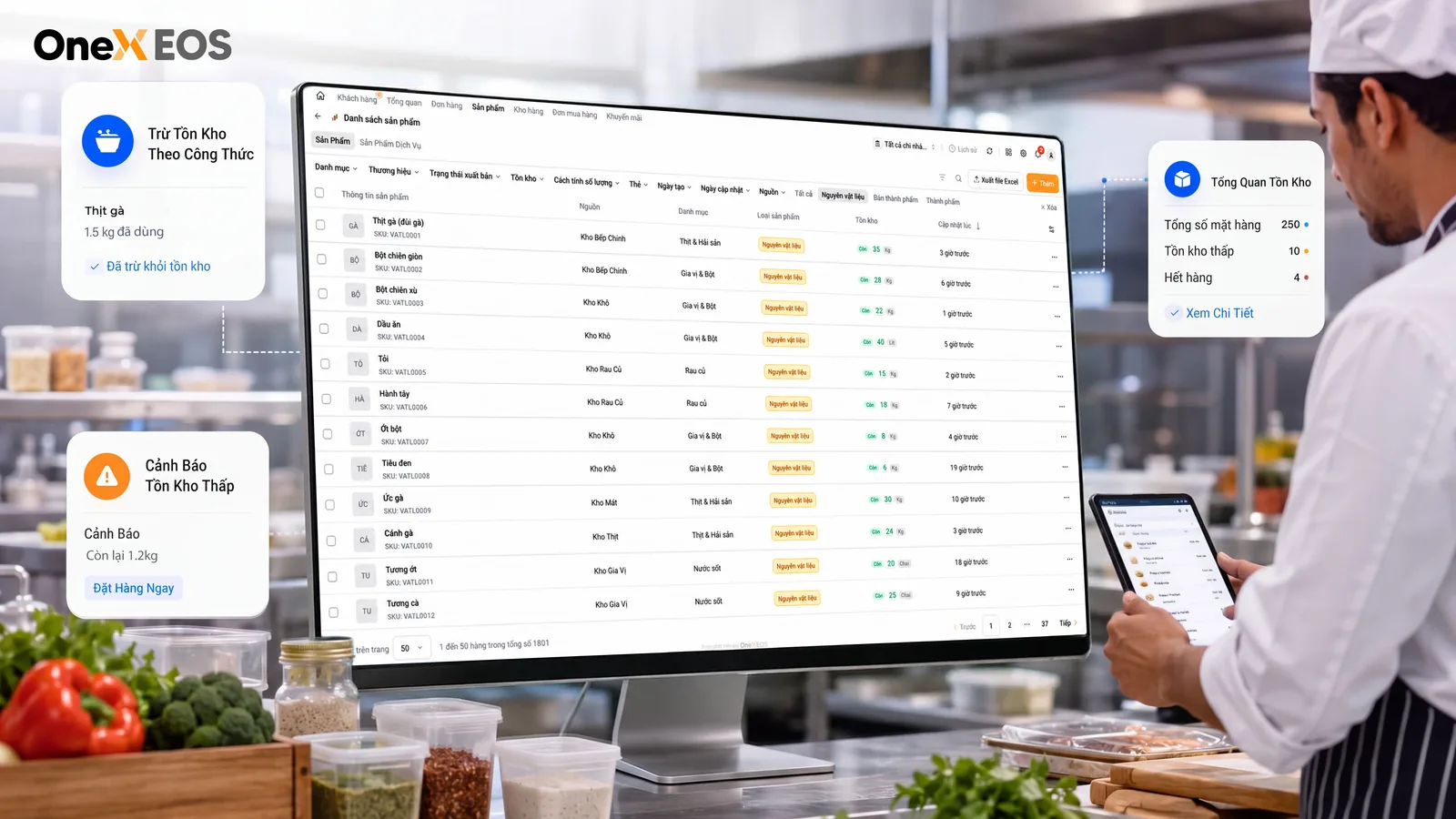 Frequently Asked Questions About Raw Material Management Software for Fried Chicken Chains
1. Can OneXEOS software track multiple branches?
Yes, the software supports multi-branch inventory management. Businesses can monitor inventory across stores, central warehouses, and transfer histories on one system. Check specific role-based permissions and real-time update capabilities.
2. Does the software automatically deduct raw materials when selling a fried chicken combo?
Yes. The OneXEOS system supports defining ingredient portion norms or recipes per dish and connecting sales data to inventory. Businesses should also configure rules for cancellations, substitutions, spoiled items, and non-sales usage.
3. Can you track shelf life for frozen chicken and sauces?
Yes. OneXEOS software supports batch and expiration date tracking. System tracking should always be paired with physical store inspections and proper storage practices for each ingredient type.
4. When opening a new store, do I need to recreate the raw material catalog?
OneXEOS software supports centralized chain management, allowing businesses to use a shared master catalog and create a dedicated inventory location for the new branch. Recipe norms, access rights, and workflows should be validated prior to launch.
5. How can I tell if a store is experiencing ingredient loss?
Reconcile opening stock, receipts, dispatches, expected usage by norms, waste logs, and ending stock. When variances appear, inspect source documents and physical processes to find root causes instead of assuming every variance is theft.
Conclusion
Effective raw material management underpins cost control and operational consistency across fried chicken chain locations. Suitable software meets core needs: centralized inventory, batch and shelf-life tracking, stock transfer records, sales reconciliation, and audit support.
Rather than selecting software solely on feature lists, businesses should address their costliest operational bottlenecks first, then test workflows directly on the system prior to rollout.
Explore OneXEOS inventory and F&B chain management solutions to evaluate the right option for your business scale, operational processes, and expansion plans today!
________________________________________
ONEXEOS - Enterprise Operating System
 Website: www.onexeos.com
 Hotline: 0986 935 251
 Email: hello@onexeos.com
 Address: M4-21, M4 Street, Manhattan Villa Area, Vinhomes Grand Park, Long Binh Ward, HCMC

